
A stable, independent solution for replacing more than one missing tooth
At Ashtree House Dental, we offer multiple dental implant treatments for patients who have lost several teeth — whether in the same area of the mouth or across different positions. Unlike bridges, which rely on adjacent teeth for support, multiple dental implants are each individually anchored into the jawbone, preserving the health of surrounding teeth and supporting long-term bone structure.
We welcome patients from Wooburn Green, Beaconsfield, High Wycombe, Flackwell Heath and surrounding areas. A thorough assessment — including clinical examination and radiographic imaging — is always required before any implant treatment is planned.
When more than one tooth is missing, dental implants can be placed individually to support separate crowns, or in a strategic arrangement to support an implant-retained bridge across a gap. Each implant acts as an artificial tooth root — a small titanium post placed into the jawbone that, over time, fuses with the surrounding bone through a process called osseointegration.
Once integration is complete, a custom-made crown or bridge is attached, providing a restoration that looks, feels and functions like a natural tooth.
The number of implants required depends on the number of missing teeth, their location, the volume and quality of available bone, and whether implant-supported bridges are being considered. Your dentist will discuss the most appropriate approach for your individual situation.
There are several ways to replace multiple missing teeth, and the right solution depends on your individual circumstances. Your dentist will discuss all suitable options with you. Some of the clinical advantages of multiple dental implants over conventional alternatives include:
Independence from adjacent teeth — a conventional bridge requires the preparation of the teeth on either side of the gap. Implants are freestanding and do not affect neighbouring healthy teeth.
Preservation of bone — when a tooth is lost, the underlying jawbone naturally begins to resorb over time. Dental implants stimulate the bone in a similar way to natural tooth roots, helping to slow or reduce this bone loss.
Stability and function — implant-supported restorations are fixed in place and do not move. Most patients find they can eat, speak and smile with confidence.
Long-term solution — dental implants have a long track record of success and, with good oral hygiene and regular care, can provide a durable long-term result.
Most healthy adults with fully developed jawbones who are missing more than one tooth may be suitable candidates for multiple dental implants. Suitability depends on several factors:
Bone volume and density — a sufficient quantity and quality of bone is required to support each implant. Where bone has been lost, preparatory procedures such as bone grafting may be possible before implant placement.
Gum health — active gum disease must be treated and stabilised before implants are placed. Periodontal disease is a significant cause of implant failure if not addressed.
General health — certain medical conditions and medications can affect healing and implant success. Your full medical history will be reviewed during your consultation.
Smoking — smoking is associated with reduced healing and a higher risk of implant complications. Your dentist will discuss this with you.
A detailed assessment, including clinical examination and appropriate radiographic imaging (which may include a CBCT cone beam CT scan), is always carried out before any treatment is planned.
Your dentist will examine your teeth and gums, review your medical history and assess whether dental implants are appropriate. Radiographic imaging — including a CBCT scan where required — allows precise measurement of the available bone volume at each implant site.
A personalised treatment plan is produced, covering the number and position of implants, whether any preparatory treatment is required, and the type of restorations planned. A full written cost plan is provided.
Where active gum disease is present, this must be treated first. Where bone volume is insufficient, bone grafting may be considered. Your dentist will discuss all preparatory requirements with you.
Implants are placed under local anaesthetic, usually in one or more surgical appointments depending on the number being placed and whether any grafting is involved.
Most patients find the procedure more comfortable than anticipated. Conscious sedation is available for more anxious patients.
Following placement, a healing period is required to allow the implants to integrate with the surrounding bone. The duration varies depending on the patient and the site but typically ranges from several weeks to several months.
Once integration is confirmed, custom-made crowns or bridges are attached to the implants. Your dentist will check the fit, bite and appearance carefully before final placement.
Good oral hygiene is essential to the long-term success of dental implants. We will provide written aftercare guidance and arrange regular maintenance appointments.
Dental implants are a long-term investment. With proper oral hygiene, regular dental check-ups and hygiene appointments, implants can last for many years — in some cases for life. The crowns or bridges supported by the implants may require replacement at some point, as with any dental restoration.
Factors that affect longevity include oral hygiene, smoking, systemic health, and whether there is any underlying gum disease. Your dentist will advise on how to maintain your implants for the best long-term outcome.
The cost of multiple dental implant treatment varies depending on the number of implants required, whether any preparatory procedures are needed, and the type of restorations planned. We will always provide a full written cost plan before any treatment begins. Flexible finance options may be available.
Choosing the right dental team for implant treatment is an important decision. Here is what you can expect when you come to us:
Clinician-led treatment — your implant treatment is planned and delivered by an experienced clinician, not delegated to non-clinical staff.
Thorough consultations — we take the time to assess your suitability properly, including clinical examination and any imaging required, before making any recommendations.
Personalised treatment planning — no two patients are the same. Your treatment plan is tailored to your anatomy, your oral health, and your goals.
Honest advice — if implants are not the right option for you, we will tell you. We discuss all suitable alternatives and help you make an informed decision.
Ongoing aftercare and support — our care does not end when your implants are fitted. We provide written aftercare guidance and arrange regular maintenance to help protect your long-term results.
If you are considering multiple dental implants in Wooburn Green, Beaconsfield, High Wycombe or Flackwell Heath, our team would be happy to discuss whether implants are the right solution for you.
A consultation and full assessment is the essential first step. There is no obligation to proceed, and we will give you honest, personalised advice.
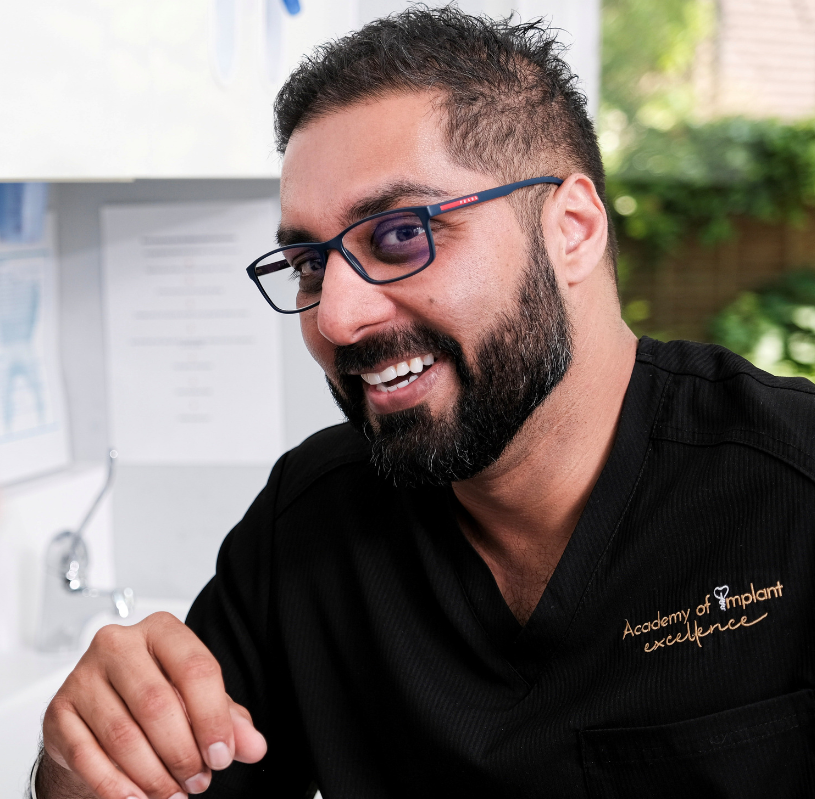
Commonly known as Dr Pav Khaira is a highly prominent British dental implant surgeon, lecturer, and mentor with over 20 years of focused clinical experience. He is widely recognised in the UK dental community for handling complex restorative cases and is affectionately nicknamed “The Titani-Nerd” or the “Wikipedia of Implantology” due to his deep obsession with implant science.
He graduated with a BDS from the University of London in 2002, later earning an MJDF RCS (Eng) and a Master of Clinical Dentistry (MClinDent) in Implant Dentistry with distinction.
Dr Khaira specialises in treating patients who have been told they lack sufficient bone or have cases too complex for standard treatments.
Possibly, yes — though bone loss is more likely when teeth have been absent for a longer period. A CBCT scan will assess the available bone and determine whether implants are feasible, or whether preparatory bone grafting may be required.
In most cases, a temporary solution can be provided during the implant healing period. Your dentist will discuss your options at the treatment planning stage.
There is no fixed maximum. In cases of extensive tooth loss across the full arch, an All-on-4 or All-on-6 approach may be more appropriate than individual implants for each missing tooth. Your dentist will advise on the most suitable approach.
The procedure is carried out under local anaesthetic, so discomfort during surgery is generally well controlled. Some soreness and swelling is expected in the days following each surgical appointment, which can usually be managed with over-the-counter pain relief.
Implant failure, though uncommon with appropriate patient selection and good aftercare, does occasionally occur. In many cases, it is possible to place a further implant once healing has taken place. Your dentist will discuss the likelihood and management of this during your consultation.