
When teeth are lost from the upper back region of the mouth, the bone beneath them gradually reduces in height. At the same time, the maxillary sinuses — the air-filled spaces within the upper jaw — can expand downwards into the space left by the missing tooth roots. This combination of bone loss and sinus expansion often means there is insufficient bone height to place a dental implant safely.
A sinus lift — also known as a sinus floor augmentation or sinus elevation — is a surgical procedure designed to address this.
By carefully raising the floor of the maxillary sinus and introducing bone graft material into the space created, new bone is encouraged to form over a healing period. Once this bone has matured, dental implants can often be placed in a site where implant placement would not previously have been possible.
At Ashtree House Dental, we offer sinus lift procedures as part of our dental implant services. We welcome patients from Wooburn Green, Beaconsfield, High Wycombe, Flackwell Heath and surrounding areas. A thorough assessment, including CBCT imaging, is always required before any sinus lift procedure is planned.
The maxillary sinuses are paired, air-filled cavities located within the cheekbones on either side of the face. Their floor lies in very close proximity to — and in some cases directly against — the roots of the upper back teeth (molars and premolars).
When these teeth are present, the roots help maintain the surrounding bone. After extraction, the following changes commonly take place:
Bone resorption — the alveolar bone (the ridge of bone that housed the tooth roots) begins to reduce in both height and width after extraction. This process is most rapid in the first few months but continues more slowly for years.
Sinus pneumatisation — the maxillary sinus progressively expands downwards as bone is lost, a process called pneumatisation. Over time, the sinus floor may drop significantly into the space previously occupied by tooth roots.
The combined effect of these two processes means that in the upper posterior region, patients who have been missing teeth for some time — particularly upper molar or premolar teeth — frequently have insufficient bone height for a dental implant of adequate length to be placed.
How much bone is needed? As a general guide, a minimum bone height beneath the sinus floor is typically required for conventional implant placement. Where this is not available, a sinus lift procedure can create the additional height needed. The exact measurements relevant to your situation will be assessed from CBCT imaging.
A sinus lift procedure involves the following key steps:
This is the standard approach used when a significant amount of bone height gain is required — typically in cases where less than 4 to 5 mm of bone height is available beneath the sinus floor.
A small oval or circular opening (the “window”) is created in the lateral (side) wall of the maxillary sinus. Through this access point, the sinus membrane is carefully elevated and graft material is packed into the space beneath. The window is then covered with a resorbable membrane and the surgical site is closed.
Because significant new bone formation is required, implant placement is usually carried out as a separate, staged procedure — typically four to nine months later, once the graft has matured sufficiently.
Key points: – Suitable where substantial bone height gain is needed – Implant placement is typically staged (second procedure after graft maturation) – Healing period of approximately four to nine months before implant placement – Performed under local anaesthetic; conscious sedation is available
This is a less invasive technique used where a more modest gain in bone height is required — typically where five to eight millimetres of bone height is already available beneath the sinus.
Rather than creating a separate window in the sinus wall, the sinus floor is accessed and elevated through the same channel as the planned implant site, using specialist instruments. Bone graft material is then introduced through this channel.
Because this approach is less invasive and the available bone provides some initial support, implants can sometimes be placed at the same appointment as the sinus elevation — allowing the procedure and implant placement to be combined in a single surgical visit.
Key points: – Suitable where moderate bone height gain is required – Less invasive than the lateral window approach – Implants may sometimes be placed at the same appointment – Shorter overall treatment timeline in suitable cases – Performed under local anaesthetic; conscious sedation is available
Your dentist will assess which approach is appropriate based on your CBCT imaging findings and the specific implant site.
The graft material placed into the sinus during a sinus lift acts as a scaffold to support the growth of new bone. Several materials may be used, either alone or in combination:
Autogenous bone (your own bone) — harvested from another site in the mouth or jaw. Considered the most biologically active graft material as it contains live bone cells, but requires a second surgical site.
Allograft (donor bone) — processed human donor bone that has been screened to clinical safety standards. Avoids a second surgical site and is widely used in sinus lift procedures.
Xenograft (animal-derived bone substitute) — most commonly bovine-derived bone mineral, which acts as a scaffold for new bone growth. A well-established and widely researched material in sinus augmentation.
Synthetic (alloplastic) bone substitutes — entirely laboratory-produced materials, such as beta-tricalcium phosphate or hydroxyapatite. Fully synthetic and appropriate for patients who have concerns about biological donor materials.
In clinical practice, combinations of these materials are frequently used. Your dentist will explain the graft material recommended for your procedure, including any considerations relevant to your preferences or health.
A sinus lift may be considered if:
A sinus lift may not be appropriate, or additional assessment is required, if you:
This list is not exhaustive. A full medical and dental history review, alongside CBCT imaging, is always carried out before any sinus lift is planned.
Your dentist will review your dental and medical history, examine your teeth and gums, and take appropriate radiographs. A CBCT (cone beam CT) scan is an essential part of the assessment — it provides a three-dimensional view of the bone height, sinus anatomy, the position of anatomical structures, and any sinus pathology that may need to be addressed before treatment proceeds.
Following the assessment, your dentist will explain whether a sinus lift is indicated, which approach is most appropriate, and what the overall treatment plan will involve. A full written cost plan is provided.
If there is any sinus pathology — such as mucosal thickening, polyps or signs of sinusitis — you may be referred for ENT assessment before your sinus lift proceeds.
In the weeks before your procedure, your dentist will provide pre-operative instructions. This may include prescribed antimicrobials or anti-inflammatory medication, guidance on diet, advice on smoking cessation if relevant, and instructions about what to avoid in the days before surgery.
Any active gum disease or oral infection must be treated and resolved before a sinus lift is carried out.
The procedure is performed under local anaesthetic. Conscious sedation is available and warmly recommended for patients who feel anxious about surgery.
Your dentist will explain each stage to you before and during the procedure. The duration of the appointment varies — a transcrestal approach may take 30 to 60 minutes, while a lateral window approach typically takes longer. You will be given written post-operative instructions before you leave.
Some degree of swelling, discomfort and bruising in the cheek, gum or under the eye is expected following a sinus lift, particularly after the lateral window approach. Most patients manage this well with prescribed or over-the-counter analgesics.
Important post-operative guidance includes: – Avoid blowing your nose forcefully for at least two to three weeks — this can disturb the sinus membrane and dislodge the graft material – Sneeze with your mouth open if you need to sneeze – Avoid strenuous physical activity for several days – Sleep with your head slightly elevated to reduce swelling – Follow the dietary and hygiene instructions provided by your dentist
If you experience significant pain that is not controlled by analgesia, fever, or heavy nasal bleeding, contact our team or seek medical attention promptly.
Following a lateral window sinus lift, a healing period of typically four to nine months is required to allow the graft material to be replaced by new bone of sufficient quality and volume for implant placement. A follow-up CBCT scan is taken to confirm that adequate bone has formed.
After a transcrestal sinus lift where implants were placed simultaneously, the healing period follows the standard implant integration timeline.
Once the CBCT confirms adequate bone formation, implants are placed in the augmented site using the standard implant procedure. Your dentist will confirm the implant plan before this appointment.
Following implant placement, a further healing period allows osseointegration to take place. Once this is confirmed, your custom-made crown or bridge is attached. Your dentist will ensure the fit, appearance and bite are correct before final placement.
One of the technical risks of a sinus lift is perforation of the Schneiderian membrane. If a small perforation occurs during surgery, it can usually be managed at the time using a resorbable membrane to seal the area. A larger perforation may require the procedure to be halted and rescheduled once healing has occurred.
Your dentist will discuss this and other procedural risks in full during your consultation before you consent to treatment.
For a staged lateral window sinus lift followed by implant placement and restoration, the overall timeline from first procedure to final crown typically ranges from twelve to eighteen months, depending on the individual’s healing rate and any additional factors. A transcrestal approach with simultaneous implant placement can, in suitable cases, reduce this timeline.
Your dentist will give you a personalised estimated timeline during your consultation.
The cost of a sinus lift procedure varies depending on the approach used, the extent of augmentation required, the graft materials selected, and whether the procedure is combined with implant placement. We will always provide a detailed written cost estimate before any treatment begins. Flexible finance options may be available. Please contact our team to discuss.
A sinus lift is a specialised surgical procedure that requires careful planning and experienced clinical delivery. Here is what you can expect from us:
Clinician-led treatment — your sinus lift procedure is planned and delivered by an experienced clinician, ensuring clinical quality and safety at every stage.
Thorough consultations — we take time to understand your concerns, assess your suitability carefully, and answer all of your questions before any treatment is planned.
Personalised treatment planning — every treatment plan is tailored to your individual circumstances, anatomy and goals. No two patients are the same, and our recommendations reflect that.
Honest advice — we will always tell you honestly whether a treatment is suitable for you, discuss alternatives where relevant, and provide a full written cost plan before anything begins.
Ongoing aftercare and support — we provide written aftercare guidance and remain available to answer questions after your treatment. Regular reviews and maintenance appointments are encouraged.
If you have been told you may not have enough bone in your upper jaw for dental implants, or if you would like to find out whether a sinus lift could make implant treatment possible for you, we encourage you to come in for a consultation.
Our team in Wooburn Green, near Beaconsfield, High Wycombe and Flackwell Heath will carry out a thorough assessment and give you clear, honest advice about your options — with no obligation to proceed.
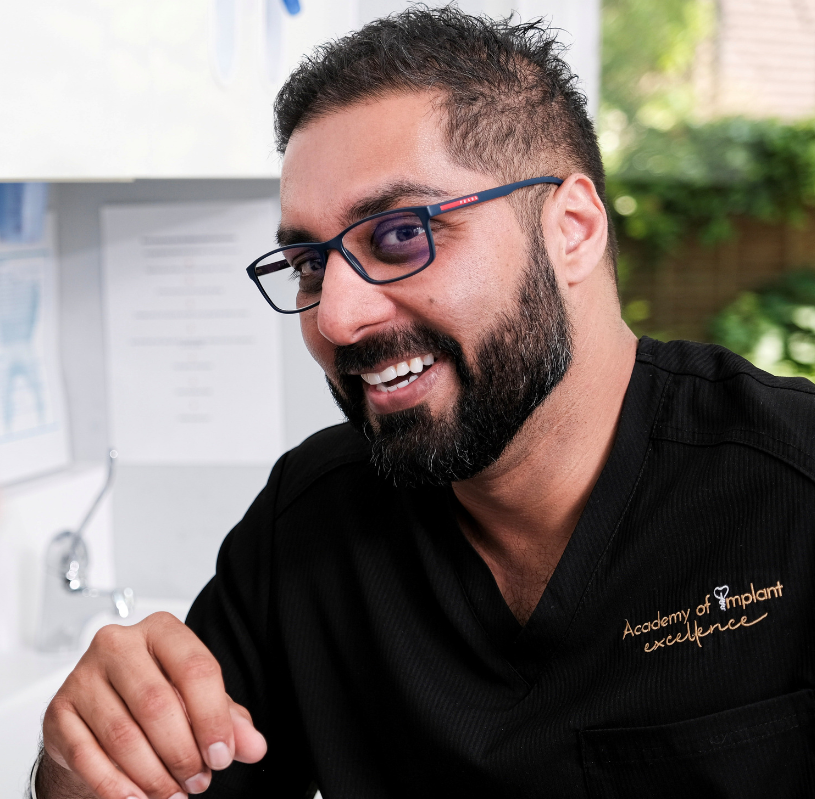
Commonly known as Dr Pav Khaira is a highly prominent British dental implant surgeon, lecturer, and mentor with over 20 years of focused clinical experience. He is widely recognised in the UK dental community for handling complex restorative cases and is affectionately nicknamed “The Titani-Nerd” or the “Wikipedia of Implantology” due to his deep obsession with implant science.
He graduated with a BDS from the University of London in 2002, later earning an MJDF RCS (Eng) and a Master of Clinical Dentistry (MClinDent) in Implant Dentistry with distinction.
Dr Khaira specialises in treating patients who have been told they lack sufficient bone or have cases too complex for standard treatments.
A sinus lift is a surgical procedure that raises the floor of the maxillary sinus and places bone graft material into the space created. It is needed when there is insufficient bone height in the upper back jaw for a dental implant to be placed safely, often because the sinus has expanded downwards following tooth loss.
The procedure is performed under local anaesthetic, so you should not feel pain during surgery. Post-operative discomfort — including swelling of the cheek and some facial bruising — is expected and usually peaks within the first two to three days. Most patients find this manageable with analgesics. Your dentist will prescribe or recommend appropriate pain relief.
A transcrestal (minimally invasive) sinus lift may take 30 to 60 minutes. A lateral window sinus lift is typically a longer procedure. Your dentist will give you an indication of the expected duration based on your treatment plan.
A sinus lift, when carried out correctly, does not affect long-term sinus function, breathing or sense of smell. Temporary nasal congestion in the immediate post-operative period is common and expected. If you have pre-existing sinus disease, this should be assessed before proceeding.
In cases where a transcrestal approach is used, and bone height meets the threshold for simultaneous placement, implants can sometimes be placed at the same appointment. After a lateral window sinus lift requiring significant bone gain, implant placement is usually deferred until graft maturation is confirmed.
This depends on the approach used and your individual healing. After a staged lateral window sinus lift, the total time from the sinus lift procedure to your final restoration may be twelve to eighteen months or longer. Your dentist will give you a personalised estimate.
Yes. Over time, the graft material is progressively replaced by your own new bone. Once fully matured, this new bone functions like a natural jawbone and supports the implant long-term.
Sinus lift procedures have a well-established track record in appropriate patients. However, as with any surgical procedure, outcomes cannot be guaranteed. If augmentation does not produce sufficient bone volume, your dentist will discuss alternative options with you, which may include a further procedure or a different implant approach, such as zygomatic implants.
Most patients take one to three days off work following a lateral window sinus lift, depending on their occupation and how they feel. A transcrestal procedure, being less invasive, typically involves a shorter recovery. Your dentist will advise based on your planned procedure.